- by tchoicehub@gmail.com
- June 4, 2026
- 0
- 0
High-Pressure Car Washers: Clean Like a Pro at Home
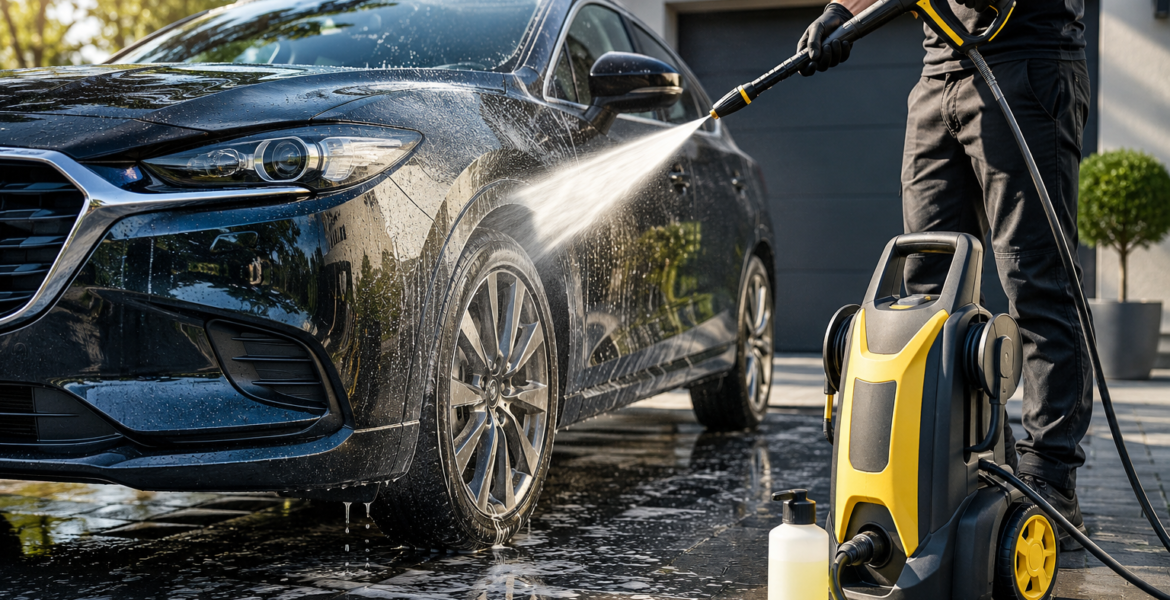
A high-pressure car washer (also called a pressure washer or power washer) is a motorised pump that amplifies the pressure of regular tap water to strip away dirt, mud, grease, bird droppings, and road grime from your vehicle’s surface, without the risk of swirl marks from abrasive sponges.
If you have ever watched a pressure washer blast years of grime off a car in seconds, you know there’s no going back to a bucket and sponge. High-pressure car washers have gone from professional tools to affordable home essentials, and the right one can save you a lot of money each year in car wash fees while delivering a cleaner, safer wash every single time.
They come in two main types:
- Electric pressure washers – Quieter, lighter, lower maintenance. Best for home use.
- Petrol/Gas pressure washers – more powerful and portable, but noisier. Ideal for professional or heavy-duty use.
In this guide, we break down everything you need to know before buying, compare the top models on the market, and help you find the best high-pressure car washer for your budget and needs.
Why You Should Buy a High-Pressure Car Washer
1. Save Money and Time:
The average car wash costs ₹300–₹800 per visit. If you wash your car weekly, that adds up to around ₹15,000–₹40,000 per year. A quality home pressure washer can pay for itself within a few months.
It also saves time – each full rinse takes under 10 minutes, with no queues, no driving to the car wash, and no waiting around.
2. Better Clean, Less Damage:
Touchless high-pressure washing removes contaminants without dragging grit across your paint. This means fewer micro-scratches, better paint protection, and a shinier finish over time.
3. Versatility Beyond the Car:
One machine cleans your car, driveway, patio, garden furniture, bikes, motorcycles, and more. It’s the most versatile cleaning tool you can own.
4. Uses Less Water:
Controlled spray technology helps reduce water wastage while maintaining strong cleaning performance and efficiency.
5. Deep Cleaning Power:
It effectively cleans hard-to-reach and heavily soiled areas, including wheels and rims, door edges, underbody sections, and tough mud stains with ease.
Top High-Pressure Car Washers
1. Amazon Basics Pressure Washer 1800W
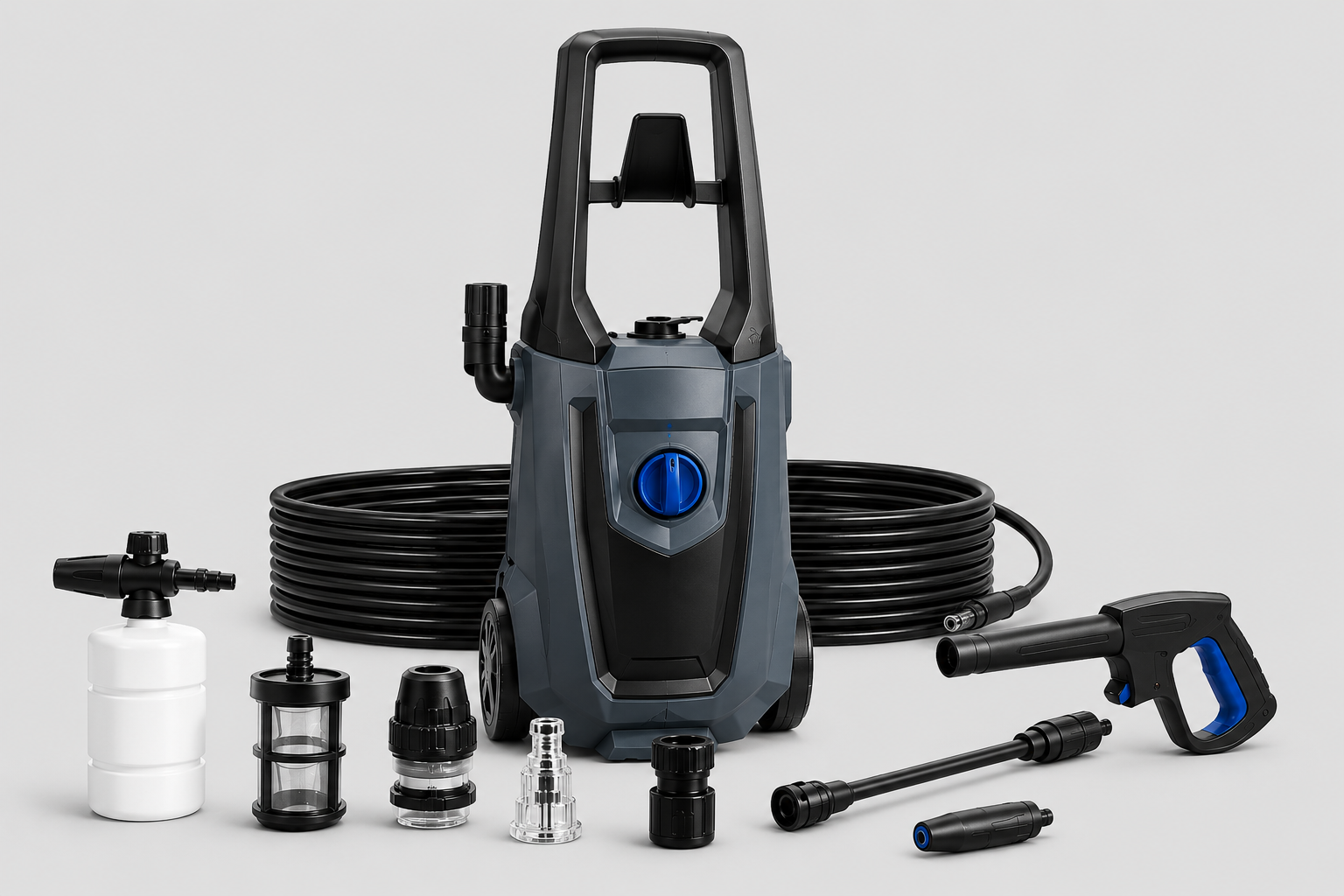
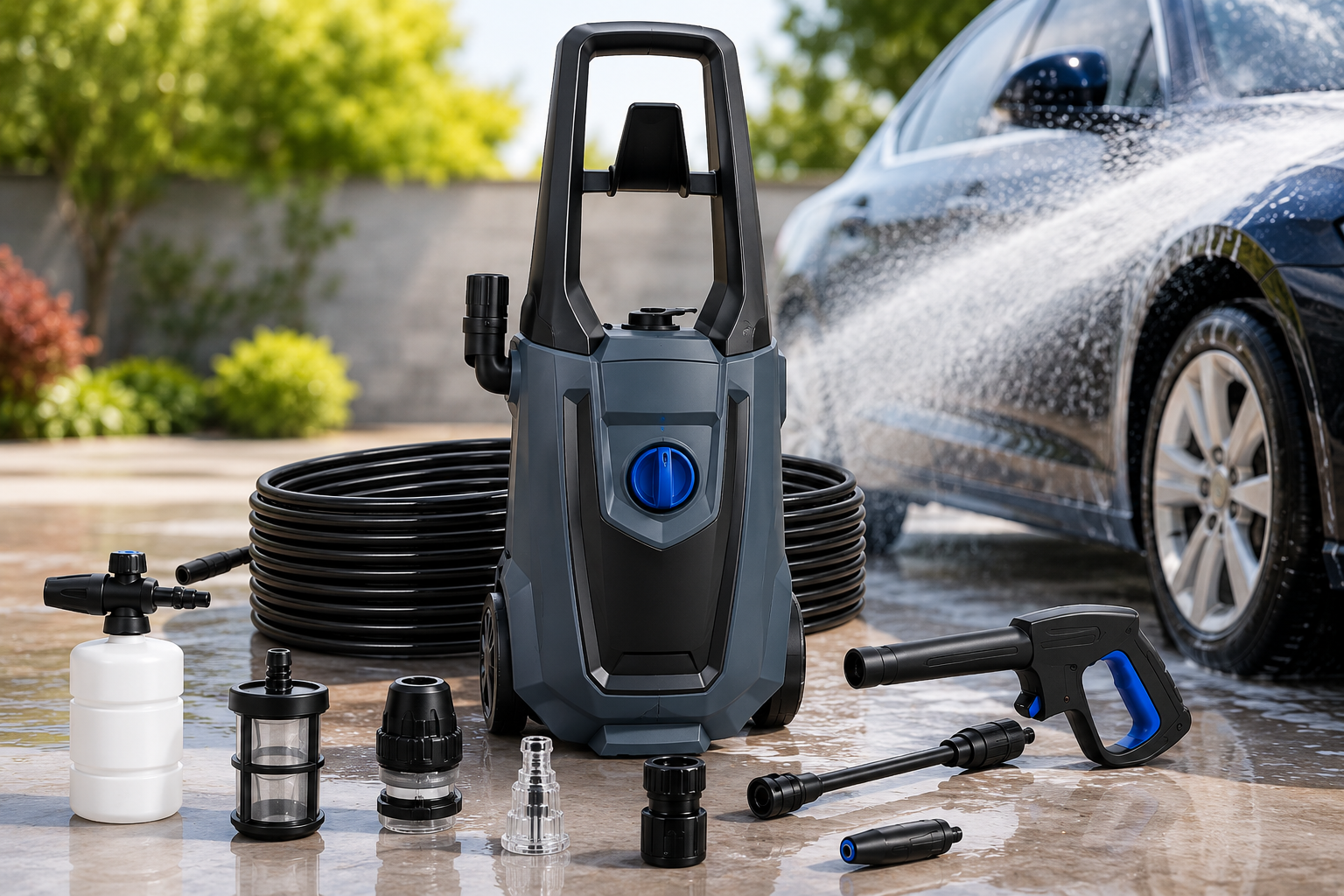

The Amazon Basics Pressure Washer looks like a solid option for home cleaning needs. With 130 Bar pressure, 1800W motor, and 6.5 L/min flow rate, it seems well-suited for washing cars, bikes, and patios. The 10m hose and included accessories are a big plus for convenience.
For the price range, it offers decent power and usability, especially for regular household cleaning. The auto-stop feature and copper winding motor also add value in terms of durability and energy efficiency.
Overall, it appears to be a budget-friendly and practical pressure washer for everyday use, though it may not be ideal for heavy-duty or commercial cleaning tasks.
2. DYLECT Ultra Force Pro High-Pressure Car Washer Pump
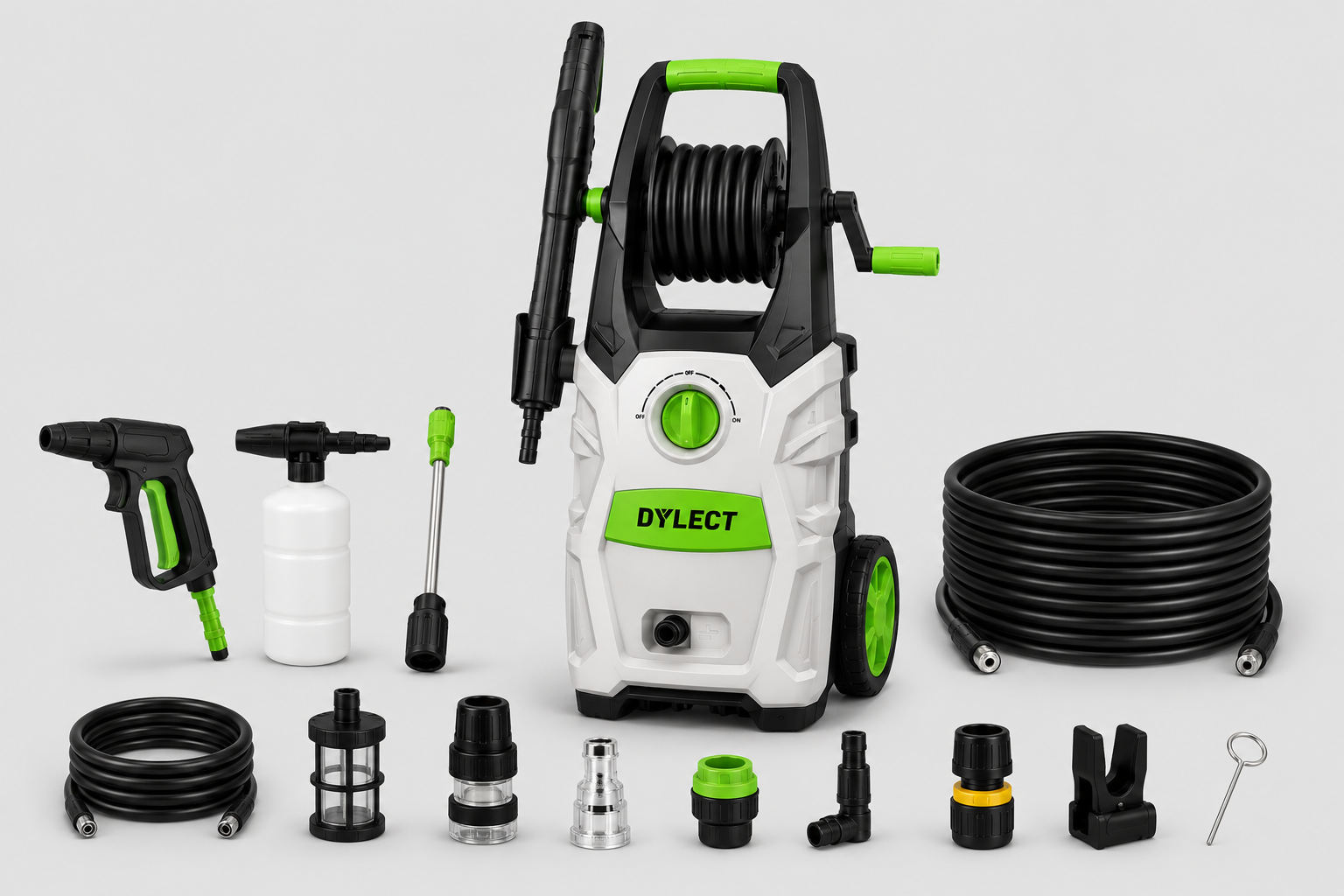

The Dylect Ultra Flow Plus High Pressure Car Washer Pump looks like a powerful option for home and semi-professional cleaning. With a 2200W motor and up to 200 Bar pressure, it delivers strong water output for removing tough dirt from cars, bikes, driveways, and outdoor surfaces. The 7.5 L/min flow rate and long 8-meter hose make cleaning more efficient and convenient.
It also comes with a complete accessory kit and an upright wheeled design, which improves portability and ease of use. The build and performance seem suitable for users who need higher pressure than basic entry-level washers.
Overall, it appears to be a high-performance pressure washer for heavy home use, offering strong cleaning power and good features, though it may be more than needed for simple daily washing tasks.
3. Turbowash Cordless Portable Pressure Washer Gun
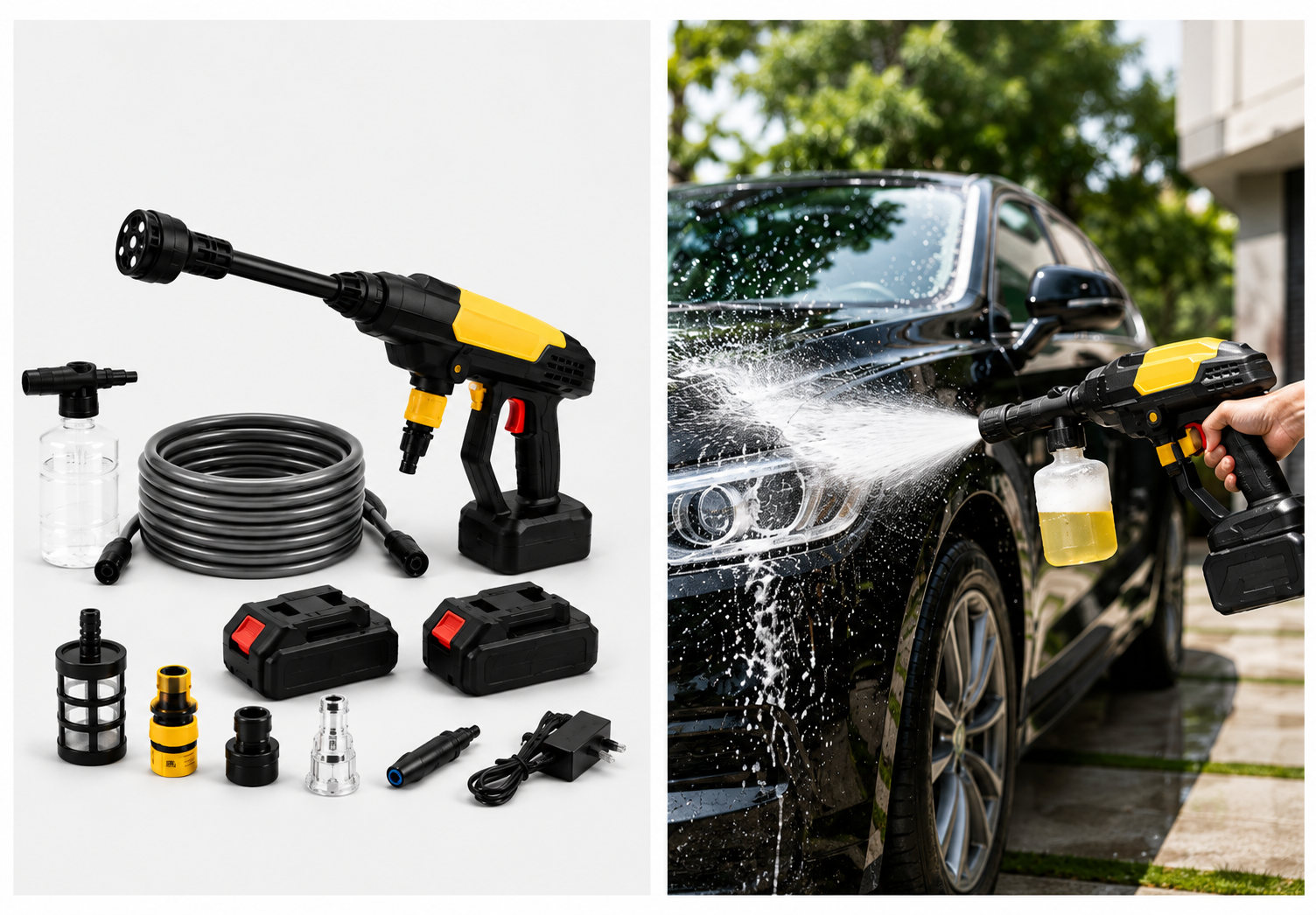
The Turbowash Cordless Pressure Washer Gun is a compact and portable cleaning solution designed for quick and convenient washing of cars, bikes, and outdoor equipment. Powered by a 48V high-capacity 12000mAh dual battery system, it offers cordless freedom, allowing you to clean anywhere without being tied to a power socket.
It comes with a 6-in-1 adjustable nozzle, letting you switch between different spray modes for light rinsing, strong jet cleaning, or foam washing. The included 5-meter hose pipe and self-priming function allow it to draw water from buckets, tanks, or any water source, making it highly versatile for outdoor use.
Lightweight and easy to handle, this pressure washer is ideal for home users who need a quick cleaning tool for vehicles, balconies, garden tools, and small surfaces.
How I Actually Wash My Car – Step by Step
Step 1 – Dry Rinse First Before any soap, do a full rinse with the wide (40°) nozzle. Top to bottom, every panel. This knocks off the loose stuff, dust, leaves, light mud – so you’re not pushing it around when you foam up.
Step 2 – Foam Soak Fill the foam cannon with a 1:8 dilution of car shampoo and coat the whole car. Let it sit for three to five minutes. You’ll see the foam start to go grey as it pulls in the dirt. This is where the real work happens – and you haven’t touched the car yet.
Step 3 – Rinse Panel by Panel Switch to the 25° green nozzle and work systematically – one panel at a time, top to bottom, overlapping slightly. Keep the nozzle at least 30 cm from the surface. Closer than that on paint isn’t worth the risk.
Step 4 – Wheels and Arches This is the dirtiest part of any car. Use the 15° or rotary nozzle here and get right into the arch liners. It’s oddly satisfying.
Step 5 – Final Rinse and Dry One last pass with the wide nozzle to clear any remaining soap. Then dry immediately with a clean microfibre towel. Don’t leave it to air dry – you’ll get water spots, especially in hard water areas.
Total time from start to finish: about 25–30 minutes. And it’ll look better than most automatic car washes.
Pressure Washer Safety Tips
- Never point the jet at people, animals, or electrical panels.
- Do not use a petrol washer indoors – carbon monoxide risk.
- Always use the lowest effective pressure on glass and rubber seals.
- Wear closed shoes – the jet can penetrate skin at close range.
Frequently Asked Questions
Q: Can a high-pressure washer damage car paint?
A: Only if used incorrectly. Keep it above 1,200 PSI minimum, use wide-angle nozzles on bodywork, and maintain a safe distance (30+ cm). Modern pressure washers designed for car use are safe when used as directed.
Q: Do I need a foam cannon with a pressure washer?
A: Not strictly necessary, but highly recommended for car washing. A foam pre-soak lubricates dirt particles and reduces the chance of scratching during the rinse. Most quality machines support foam cannon attachments.
Q: How often should I wash my car with a pressure washer?
A: Every 2–4 weeks is ideal. More frequent washing may be needed in the monsoon season or after highway driving with heavy bug/tar splatter.
Q: Electric vs. petrol pressure washer for car washing?
A: Always electric for car washing at home. Petrol washers are typically 3,000+ PSI — far too powerful for paint. They’re also louder, heavier, and require fuel management.
Q: What’s the best PSI for washing a car?
A: The sweet spot is 1,200–2,000 PSI. Most car-focused electric washers fall right in this range by design.